THE CHINESE PROBLEM- NEHRU'S LEGACY
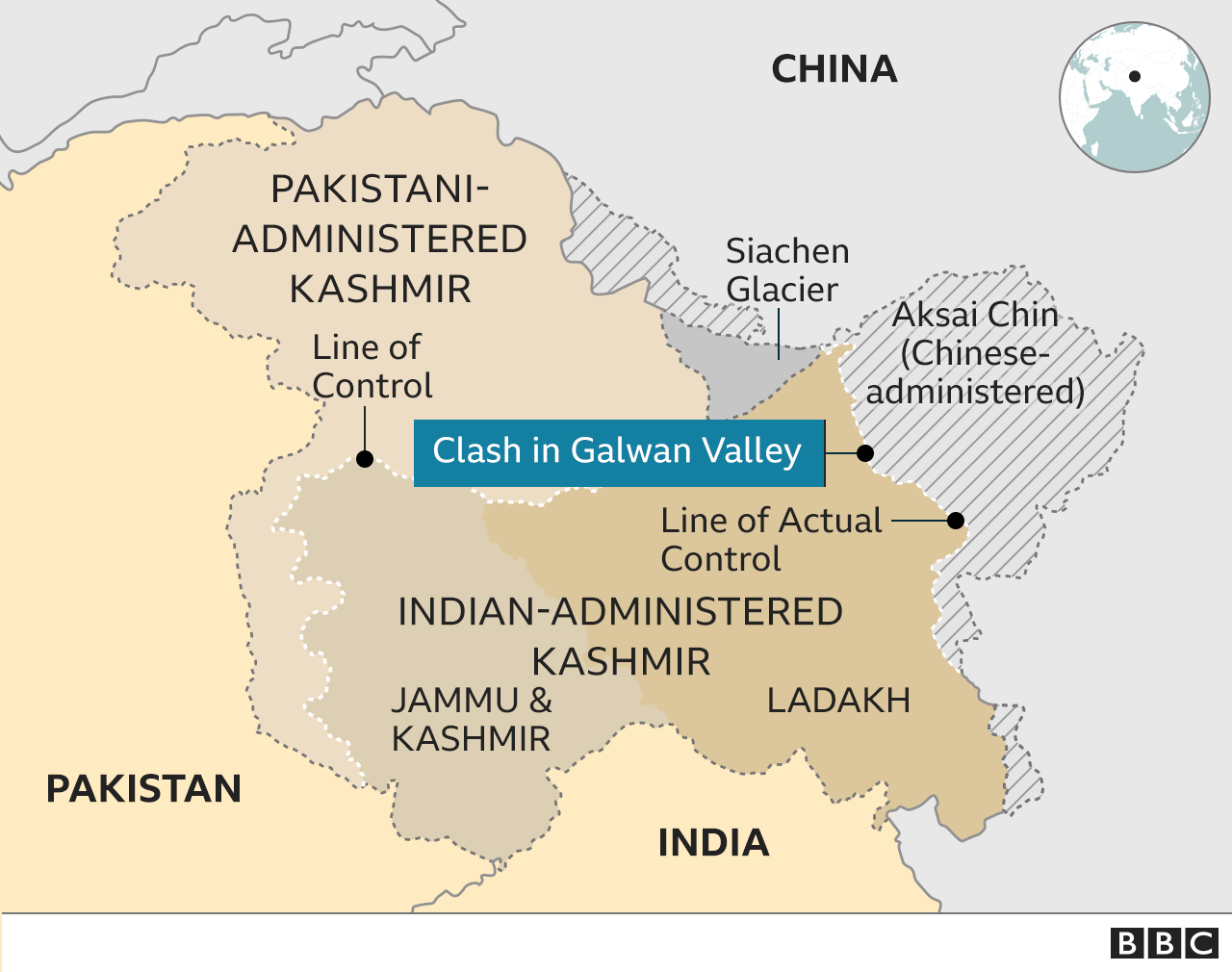 it was 16th June , I just woke up from my afternoon nap which has become a scheduled thing for me in these unprecedented times . while rubbing my eyes by one hand and with another i took my mobile phone which was lying on bed and clicked the internet icon and the first thing popped up was a telegram notifications of online news outlet The Quint , which stated that a 'violent face-off took place ' on Monday night "with casualties" at the Galwan valley in eastern Ladakh . after clicking onto it i realised that the word 'casualties' was used for 3 martyrs including the commanding officer of patrol company, though i am not well versed with military ranks and significance but even a slight awareness of army would tell us that the post of commanding officer is like father to the whole company and loosing him on battlefield meant something very big has happened to understand the whole situation I rushed downstairs and the news was all over TV, initially i thought of gunned face off but it came out to be man-to-man combat and both sides experienced casualties
 history, identity, political system!
It was a quite bad coincidence that on same day morning i was reading about history of Indo-china relations but it would be to immature on my part to come to any conclusion but after going through some reliable articles and views of foreign policy practioners. my common understanding would argue that Sino-Indian relations has experienced more downfalls than risings .Most of their interest contradicts each other in contemporary geopolitical arrangements . their way of governing their population, their way of looking towards tradition and culture, their way of building their identity. so long story short, political system of both countries are on opposite side of spectrum, one being authoritarian communist one party system and other being multiparty vibrant democracy so this does not give larger scope to both countries to find common ground for relation to build upon.
India share deep and historical relations with its eastern neighbours and one of the most important being " buddhism " ,
religion that born in India but flourished in eastern Asia and subsequently declined in its birthplace but still remains a significant bridge between India and East Asia , the way king Ashoka sent his family to propagate the teachings of buddhism, after couple of centuries numbers of travellers came to India to study buddhism . one of the prominent traveller was Hsuan Tsang ,most prominent figure in harshawardhan's reign and was rightly described as "prince of pilgrims"
Hsuan tsang brought 657 manuscript ,carried by 20 horses to china and translalted plenty of them in chinese language but the constraint to bring this rich cultural heritage aspect in indo-china relation is the ideology of chinese communist party which thinks of religion as "opium of masses" and culture as a way of maintaining the "hegemony" of rulers. ironically the same Mao Zedong who lead china towards communism when began to loose his hold on power began the cultural revolution and reasserted his personality cult(hegemony) in chinese communist regime and launched a campaign to destroy "four olds" i.e old idea, old customs,old habit, old culture
so dealing with such regime demands high level of diplomatic perseverance. and diplomacy is all about discussions and deliberation and to bring someone on table to talk needs something to talk i.e some mutually beneficial to work upon so India went ahead and showed willingness to have good relation to keep good relation with neighbourhood and made unprecedented and somehow in today's context unimaginable concessions to peoples republic of china ,some of them are enlisted down here
1)non cooperation with USA and disassociating oneself from USA's position in korean war (in same war china sent 300000 troops to fight along with north korea against USA )(1950-1953)
2)refusing to sign Japanese peace treaty due to non inclusion of PRC in it.(1951-1952)
3) strongly supporting PRC over Taiwan in united nations security council .
4)breaking diplomatic isolation of PRC(initially they confined only in international communist movement) by inviting them to bandung conference in 1955 , which is precursor of non alignment movement
5) India relinquished its inherited special rights in tibet and recognising PRC's claim to Tibet.
realpolitik underneath the moral edifice ?
so the question stand in front is why such good and willing gesture which now seems to be unrealistic, some people argues that it was nehru's idealism in international relations and unchallenged stature and no strong and critical voice back home allowed him to take these unilateral decisions . some says China was part of nehru's grand vision that asia will provide moral force to world . But in all of this idealism and utopian resolve there lies a strong sense of realpolitik and deep understanding of contemporary politics in europe which tells that how not accommodating and acknowledging the strength of great power and instead vilifying it leads to unpredictability and disaster. why did german people allowed hitler to be leader of their country , one of the reason is the treatment germany received after first world war, the way their representatives treated at paris peace conference . germany was made responsible for everything and wealth was drained from germany to allied nations in coming years
so this learning of history made it clear to nehru that big power must be respected and isolating them would lead to unpredictability and suspicion .the Diplomat magazine's Nabarun roy quotes nehru's statement in parliament in 1950,"can anyone deny china at the present moment the right of great power from point of view of strength and power ?.. She is Great power, regardless of whether you like it or dislike it."
though prime minister nehru loathed the immoral politics of west but his policies always had more realistic tilt but such a realistic view of nehru has never been at forefront when we talk about his legacy
from nonalignment movement to debacle of 1962 .
 |
| nasser , nehru, titto |
power and strength as precondition for peace!
by the logic of realism, one of many thing nehru did right was to acknowledge major power and its strength but other side of coin he failed to understand or to implement is strengthening one's own power capabilities and bringing one's own administration in order. we can argue that the idealism to which nehru subscribed talks about peace, multilateralism which led him to focus on multilateral engagements . outnumbering the strength of global power was quit fascinating idea but as student of international relation my understanding would say that , no relation gives fruits until and unless it has strategic and defence aspect coupled with trade and investments . silence and passive descent of members of NAM post 1962 is testimony to importance of strength and power to deal with aggressive neighbour .
so parallel development of defence and strategic relations would have had reduced the extent of what we lost in 1962 . so was it just nehru or there are other domestic aspects to what happened in 1962?
first time border dispute got attention was 1957 when china built road in aksai chin and then chinese premier zhou enai claimed part of NEFA(north east frontier province a.k.a arunachal pradesh) ladakh and sikkim which nehru refused.
 |
| nehru with zhou enlai |
failed attempt of reconciliation
1960 was last chance to resolve border dispute when zhou enai privately made an offer that if india accepts chinese claim over aksai chin then china will let go off its claim in eastern region but according to jairam ramesh (biographer of V.K.krishna menon ) says that post 1958 nehru was in decline , right wing politician in parliament and in nehru's cabinet were against the negotiations and nehru's close confidant V.k krishna menon(former diplomat and defence minister from 1957-1962) who was keen on resolving border dispute was kept out of loop and the 1960 negotiations failed.
so post negotiations it was very much clear that china is in state of aggression and miitary of india must be kept ready. somehow the generals like Thimayya and thorat were in locked horn with defence minister and this whole fiasco led derailment of military development and within days tawang sector collapsed .china entered in brahmaputra foothills and declared unilateral ceasefire and withdrew its troops to what they called line of actual control which till today remained an unmarked territory unlike LOC along paksitan border.
new leadership old challenges!
was Nehru right or wrong is not question to answer but it was failure of Nehru, indias diplomacy, miitary. so the conclusion is to be moral voice of world, strength in shoulders is precondition otherwise that voice becomes futile. there are so many if's and but's in this issue , what if Sardar Patel would have been alive? what if negotiations would not have had failed?what if military was modernized ? all of these questions are now part of Nehru's legacy , every government will hold him responsible for anything related to china so the current prime minister Narendra Modi, who even after meeting with chinese premier Xi Jinping 18 times still reminds us of Nehru's failure but now he is in charge of making things happpen .
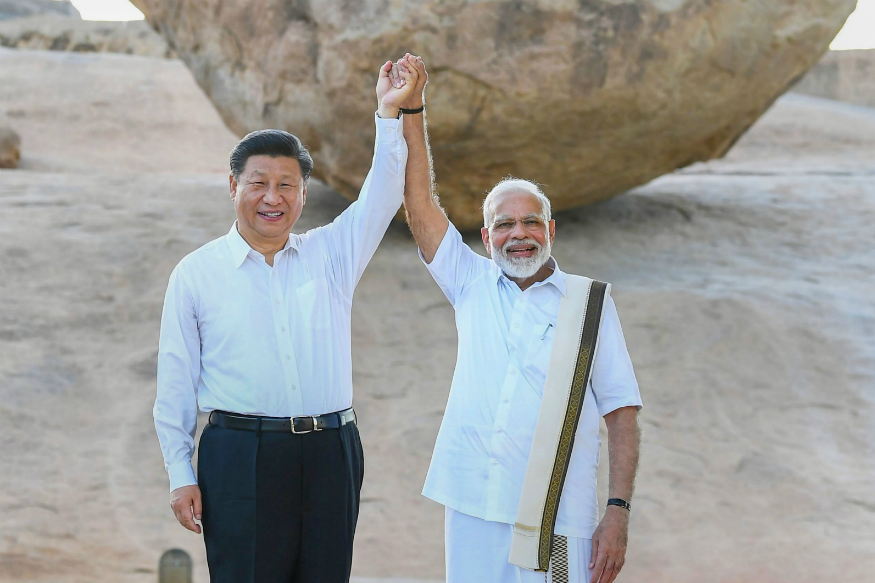 |
| modi and xi in mahabalipuram |
whether its wuhan summit post Doklam or Mahabalipuram it is very clear that chinese leadership is not ready to reduce its aggression but now in times when world is facing pandemic which originated in china. india has once in million opportunity to resolve those long standing issue not only because it has found new strategic partners in form of QUAD( USA , Australia,Japan, India) but current government and its leadership enjoys immense popularity back home so it will not be so hard to manage popular sentiments .
The casualties which i told in very first paragraph stood at "20" , 20 brave soldiers laid their lives for larger cause . its not just lives we lost , it is the hope we lost. hope to bring peace into continent , peace between two ancient civilisation, peace between two economic power. but as they say we cant choose our neighbour so we must find way to bring peace and to reduce suspicion among both nations , war can be solution but it is costly affair and it would be failure of realpolitik if we choose war so peace is not just ideal way of resolving issues but affordable one too.
Comments
Post a Comment